The Number That Actually Splits Every Plantation Beach Listing
Two houses on the same street in Plantation Beach can list within ten thousand dollars of each other and still walk into two completely different flood insurance conversations at the closing table. Not because one sits closer to the water. Not because one has a dock and the other doesn't. The split comes down to a number most buyers never think to ask about until their lender brings it up: what would it cost to rebuild the house from scratch.
That number, not the sale price on the listing sheet, is what now decides whether a Plantation Beach buyer or seller gets pulled into Florida's newest flood insurance mandate.
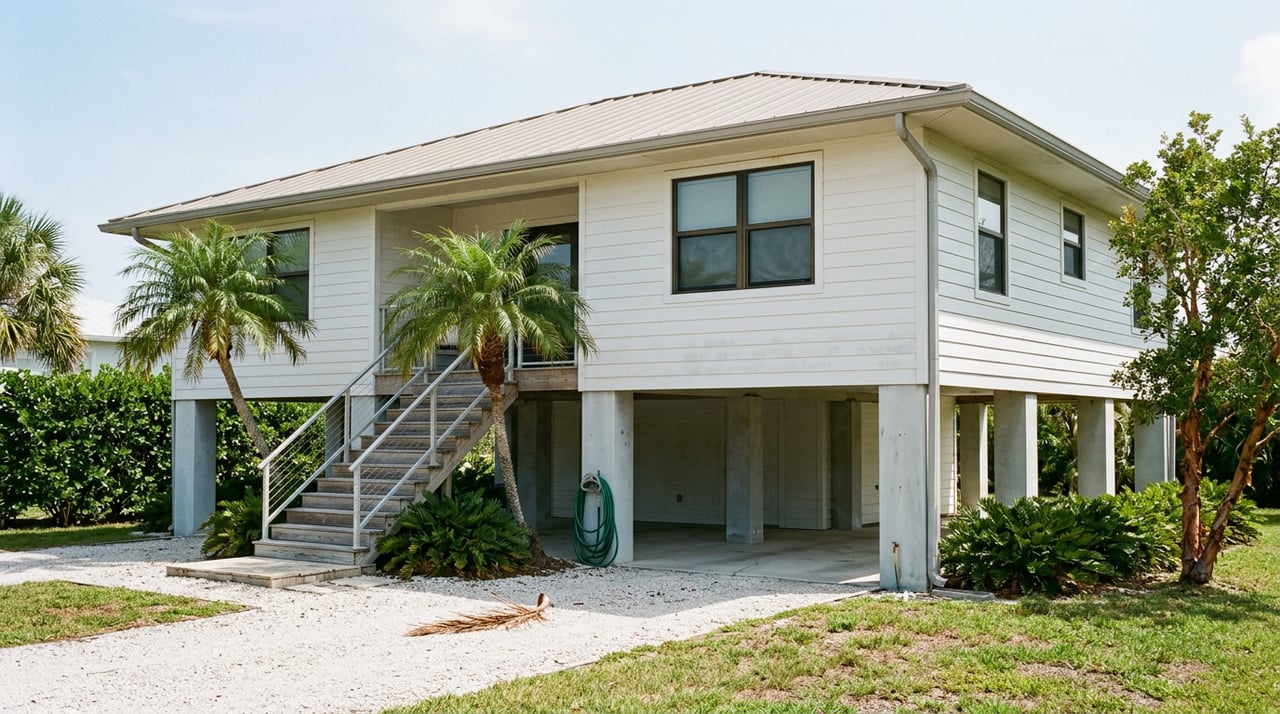
Plantation Beach sits at mile marker 87 on both the Gulf and Atlantic sides of Plantation Key, and the subdivision covers a wider range of homes than its size would suggest. Listings have run from roughly 500 square feet to more than 2,800 square feet, with prices from about $316,500 up to $4.7 million. That is not a neighborhood of look-alike houses. It is a mix of small older cottages sitting a few doors from newer, larger, elevated concrete construction, on both sides of the highway.
That mix matters more than usual this year, because Florida's insurance rules stopped treating homes by price and started treating them by what they would cost to rebuild.
Citizens Property Insurance Corporation, the state's insurer of last resort and a common carrier for older or harder-to-insure Keys properties, has been phasing in a flood coverage requirement tied to a specific figure called Coverage A, or dwelling replacement cost. Replacement cost is not market value. It is the estimated dollar amount to rebuild the structure from the ground up at today's construction prices, and it is often a very different number than what the house would sell for.
The rollout has moved fast:
The part that catches people off guard is the zone language. This requirement applies whether the home sits in a high-risk Special Flood Hazard Area or in a Zone X property that has never flooded. Citizens is not asking where you are on the flood map. It is asking what your house would cost to rebuild, and if that number clears $400,000 as of this year, flood insurance stops being optional.
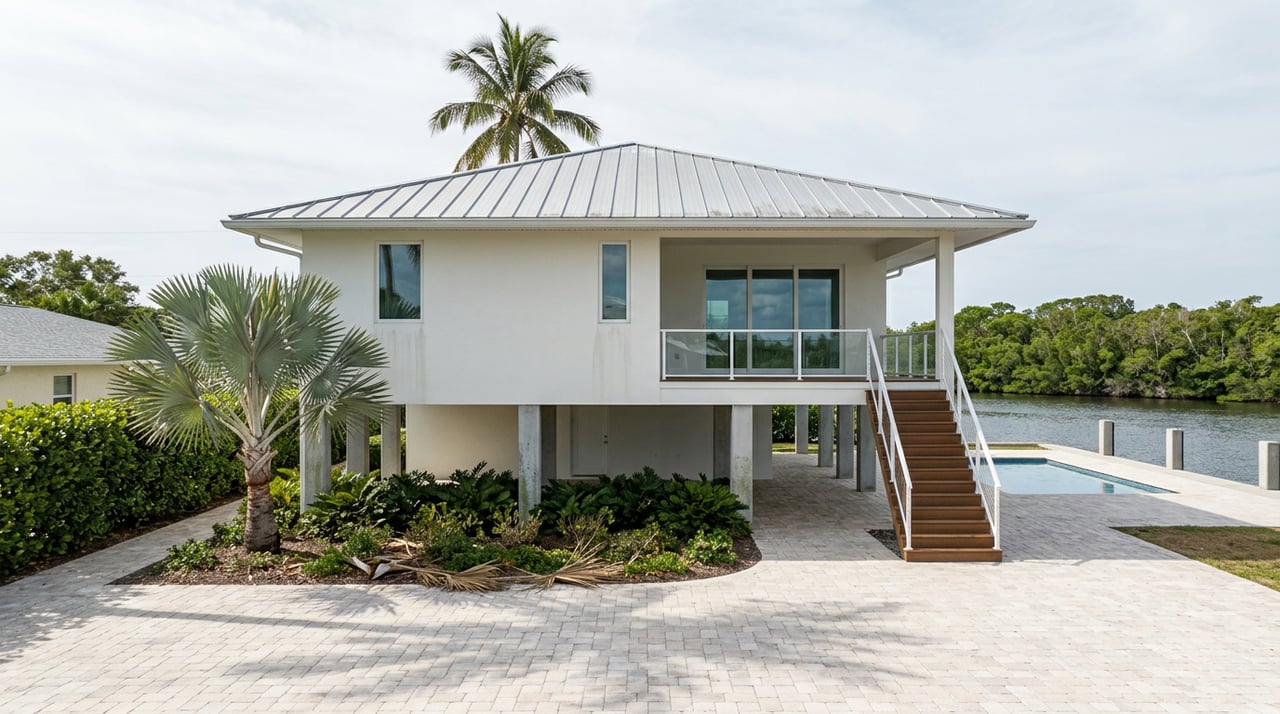
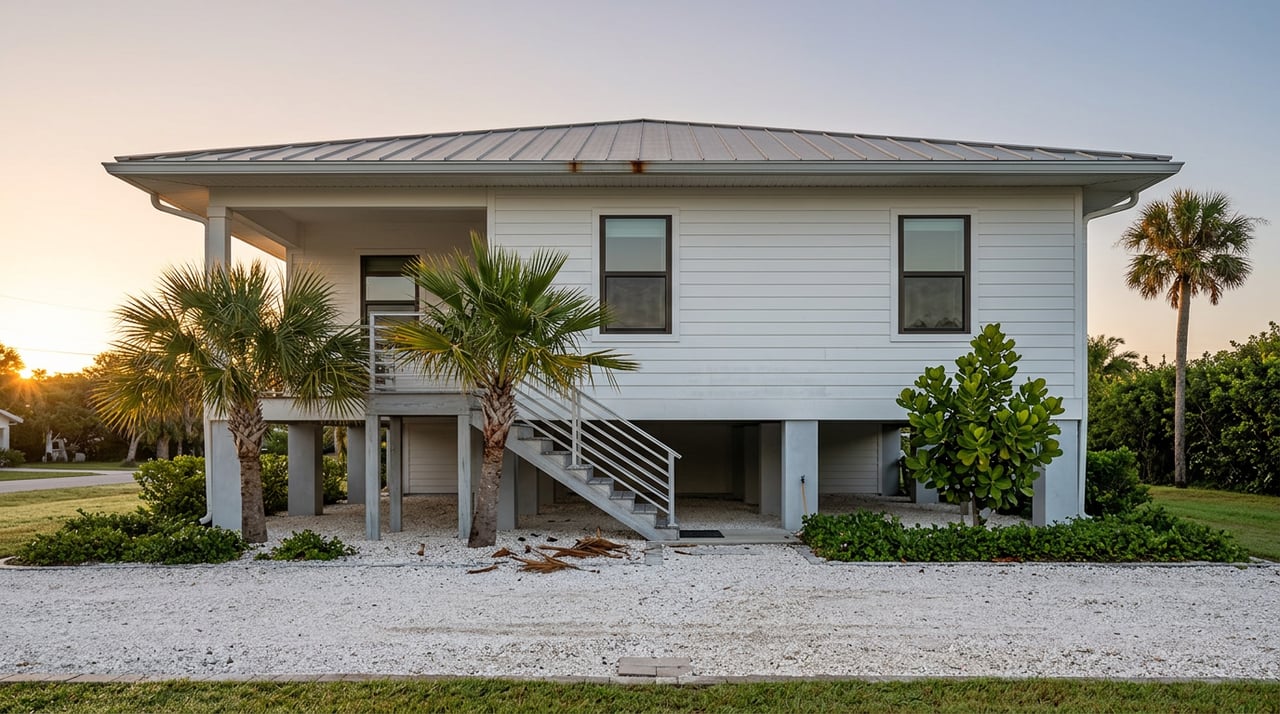
Here is where Plantation Beach's structure mix turns from a curiosity into a real transaction issue. A compact, older, non-elevated cottage on a smaller footprint might carry a Coverage A estimate well under $400,000 even if it sits on valuable canal or bayfront land, because rebuild cost tracks square footage and construction type, not lot value. A newer elevated concrete home two streets over, built to current wind and flood codes with impact glass and a metal roof, can clear that $400,000 replacement threshold easily even at a similar list price, because modern hurricane-rated construction costs more per square foot to reproduce.
That means a seller cannot look at a comparable sale in Plantation Beach and assume the insurance picture will match. The house that looks like the better deal on price per square foot might be the one that triggers a mandatory flood policy the buyer wasn't expecting to shop for.
FEMA's Risk Rating 2.0 system adds another layer on top of the Citizens rule. Since the shift away from broad flood zone pricing, premiums are calculated from the individual building: its elevation relative to Base Flood Elevation, its distance from water, its construction type, and its flood history. In Monroe County, Base Flood Elevation typically runs between 6 and 12 feet under the current NAVD88 datum, and a difference of even a foot in a home's first floor height can move the annual premium by hundreds of dollars. Two houses on the same block, same flood zone letter, same asking price, can carry meaningfully different flood insurance quotes because one sits a few feet higher off the ground.
If a Plantation Beach home does not have a current elevation certificate, that document becomes the first thing to request once an offer is on the table, not after. It measures the lowest floor height against Base Flood Elevation and gives an insurer the hard number they need to quote instead of estimating conservatively. In Monroe County, a certified elevation survey typically runs $400 to $1,000 and can usually be turned around in five to seven business days, which is fast enough to fit inside most Florida Keys contract timelines if it's ordered early.
There is a second local factor worth knowing before assuming the worst on premium cost. Islamorada participates in FEMA's Community Rating System, a voluntary program that rewards municipalities for floodplain management practices with a class rating that can lower flood insurance premiums for property owners in the community. Depending on the property and policy, that participation can translate into significant savings, in some cases cutting a premium by a meaningful percentage rather than a token amount. It will not offset every mandate, but it changes the math enough that a buyer or seller should ask their insurance agent to run the number with the CRS discount applied before assuming the worst case.
One more detail matters for anyone in Plantation Beach whose rebuild cost lands above the mandate threshold. A standard National Flood Insurance Program policy caps building coverage at $250,000 and contents at $100,000. For a home with a replacement cost estimate of $500,000 or more, that ceiling leaves a real gap between what the NFIP will pay out and what it would actually cost to rebuild. Sellers of larger or newer Plantation Beach homes, and buyers financing them, should expect the conversation to include private or excess flood coverage layered on top of the NFIP base, not the NFIP policy alone.
If you are preparing to sell in Plantation Beach this year, get a replacement cost estimate from your insurance agent before you set a list price, not after an offer arrives. If that number is anywhere near $400,000, a buyer's lender is going to ask about flood coverage regardless of what flood zone letter appears on the county map. Having a current elevation certificate ready to hand over shortens that conversation considerably and can be the difference between a smooth underwriting process and a financing delay close to closing.
If you are buying, ask for the elevation certificate and the seller's most recent flood insurance quote as part of your due diligence, the same way you'd ask about a roof age or an HVAC service record. A house priced lower per square foot is not automatically the cheaper one to insure. In a subdivision built out over decades on both sides of a highway, that assumption breaks down more often than it holds.
Does the $400,000 flood insurance requirement apply to every home in Plantation Beach? It applies to Citizens Property Insurance policyholders whose dwelling replacement cost, not sale price, is $400,000 or more as of January 1, 2026. By January 1, 2027, the requirement extends to every remaining Citizens policy regardless of value. Homes insured through private carriers follow their own carrier's rules, which may differ.
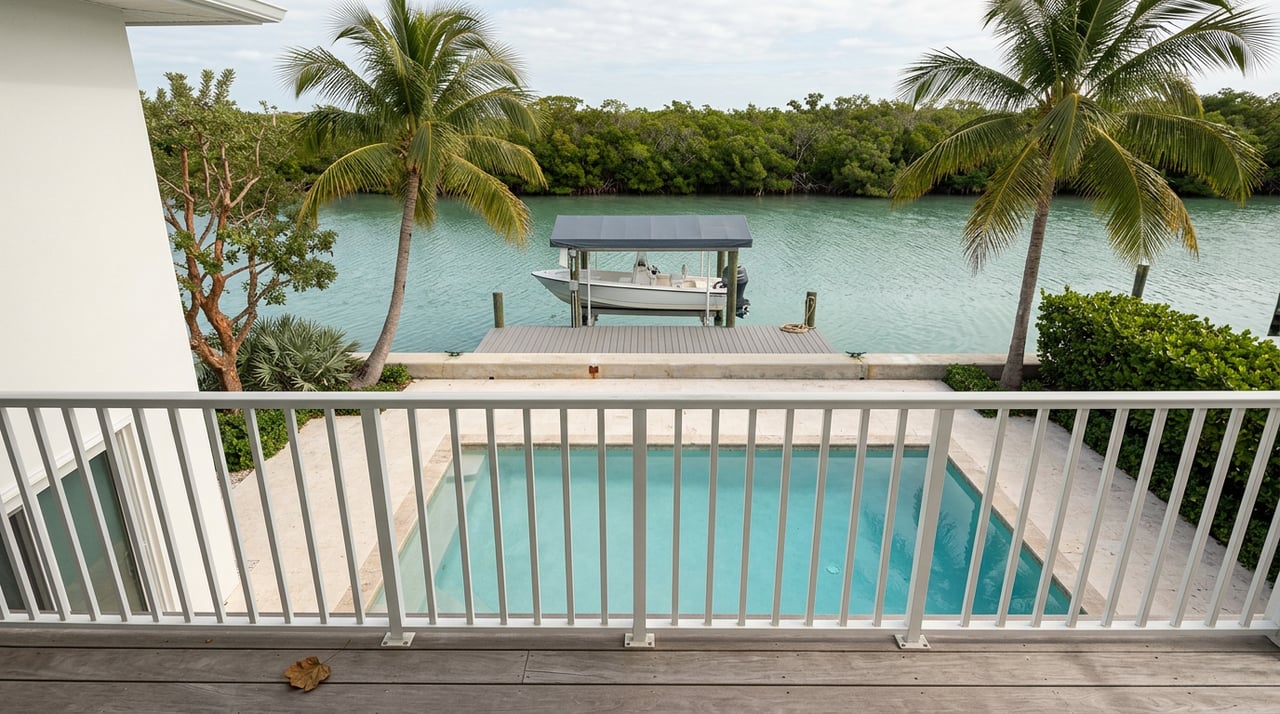
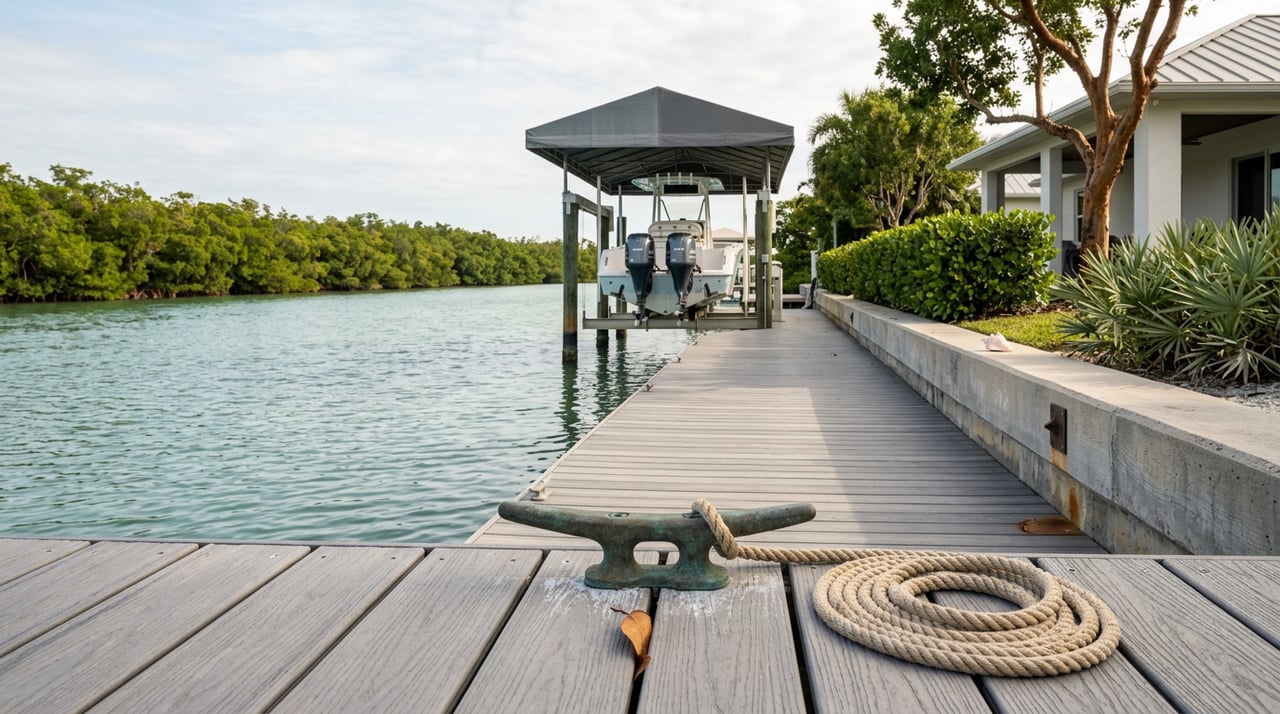
How is replacement cost different from what I paid for the house? Replacement cost estimates what it would take to rebuild the structure at current construction prices. It does not account for land value, water frontage, or dockage, all of which can make a Plantation Beach home's sale price much higher or lower than its rebuild cost.
Can an elevation certificate lower my premium even if I'm above the mandate threshold? Yes. Insurers use the certificate to price the policy on your home's actual first floor height relative to Base Flood Elevation rather than a conservative default assumption, and a home that sits above BFE can see a meaningfully lower quote once that documentation is on file.
Plantation Beach rewards buyers and sellers who look past the list price and ask what a specific structure would actually cost to insure and rebuild. If you're weighing a purchase or preparing to list on either side of MM 87, Alina Davis can walk through what a specific address's flood insurance picture is likely to look like before you write or accept an offer. Let's Connect.

Whether you're searching for your perfect Keys escape, investing in a vacation rental, or selling a slice of paradise you've loved for years, my goal is always the same: honest guidance, strong advocacy, and a seamless experience from start to finish. The Florida Keys isn't just real estate — it's a lifestyle, and I'm here to help you find your place in it. I would be honored to help you take that next step toward sun, water, and everything the Keys has to offer.